
Guide to power backup for solar systems

Most solar PV systems are designed with storage in mind, however, a common question we get asked is will my solar PV system still operate during a power cut.
If backup functionality is essential to your home solar panel system, it may be worth considering EPS functionality.
What is EPS Mode?
EPS or Emergency Power supply refers to a Solar PV System’s ability to automatically or manually change over to powering your essential circuits from your battery storage system, in the case of a power cut. EPS functionality gives you access to the energy stored in the battery in the event of grid failure. These features can be used to continue to power the essential circuits in your home or even the entire home in the instance of a power cut.
MYTH BUSTER: A Solar panel and battery system will not automatically provide backup storage in the case of a power cut, despite EPS functionality being listed on the datasheet. This is because by law a standard home solar panel system is required to be disconnected from the grid in the event of power failure, to prevent the panels sending electricity through the power lines and electrocute the engineers who are working on them. Only certain types of EPS systems and inverters can get around this.
Despite popular belief, many solar batteries will not provide you with a backup supply straight out of the box. 90% of the hybrid solar inverters on the current market will come with the hardware to support EPS compatibility, and will require us to install external components, in order to access this functionality. This is a time-consuming addition to any solar panel installation and should be planned for ahead of installation.
Some brands can only run the EPS mode as long as there is energy stored in the solar batteries. It is only with certain inverters models of some brands that you can draw energy from either the PV or the battery during a power cut.
Inverters that can continue charging from solar during a power cut, even after the battery reaches its minimum reserve (non-exhaustive):
Sigenergy SigenStor (with Gateway)
Tesla Powerwall 3*
Solax X1 Hybrid G4
Fox ESS Hybrid
Victron (with appropriate MPPTs)
Sunsynk
*Tesla enters a low-power standby mode at very low state of charge and periodically attempts to restart using available solar before resuming backup supply.
Inverters that cannot run if battery is depleted during an outage (non-exhaustive list):
Solis hybrid inverter
Growatt hybrid
Do you really need battery backup?
When considering installing EPS to your solar panel system we recommend that you ask yourself how often will you be using this feature, and whether or not backup storage is essential to your energy needs:
Do you live in a rural remote area, prone to regular power cuts, for say 1 or 2 power cuts a month?
Do these power cuts last a short period of time?
Are you working from home, using servers, mining bitcoin, or using other devices that require continuous power supply such as medical equipment?
Is your storage capacity large enough to keep reserved power? Remember EPS can only supply as much power as your battery has available at the moment the grid fails, even with an inverter that can run solar + battery during an outage, if this occurs during the night. To guarantee power during an outage, you would need to reserve part of the battery exclusively for backup (for example, 20%). However, this means that portion will not be available for everyday use — so you may need to either pay for a larger battery or accept reduced savings from your system.
Typical Additional Costs
Adding EPS will increase the overall cost of your solar and battery system. The amount varies depending on the level of backup you choose:
Simple socket backup (Level 1) may add around £150-£300.
Dedicated essential circuits (Level 2) generally add £500-£1000, depending on wiring complexity.
Whole-house backup (Level 3 (manual) and Level 4 (automatic)) generally starts from £1,000 and £1500 respectively as it requires specialist switching gear, larger inverters, and more installation time.
It’s also important to consider battery size: to make the most of EPS, you may need to increase storage capacity, which adds to the investment.
The Different Levels of EPS for solar
At Ulex Energy we provide all levels of house backup.
Level 1: Automatic sockets
A double 13A socket can be wired to your solar battery system as an EPS outlet. This is a relatively low-cost addition to any solar PV system, yet it allows the inverter to automatically disconnect from the grid to your socket in the event of a power cut. This is useful for powering small loads, such as charging a mobile phone or a light source. In this case, the socket is just an outlet for what the inverter can do, and will discharge energy at 3kW or 5kW depending on your battery and inverter rating.

Level 2: Automatic Circuits
With the addition of an extra consumer unit and some wiring the battery inverter can be used to operate one or more circuits, typically lighting and perhaps also the fridge and internet router. Again in a power cut after a short delay, these circuits will become automatically powered by the battery system.
Due to power limits on the EPS output, this approach cannot be used to power the whole house as it is limited by the amount of power it can draw.

Level 3: Manual Whole House Backup
In the event of a power cut, a homeowner can manually turn off all high power loads, and engage a full house switch over where your home demand is now supplied directly from your battery. This is done by rerouting the incoming grid connection and the house main consumer unit, to go through the battery system instead.
Whilst it may sound like an inconvenient process, it does encourage the owner to turn off unnecessary heavy loads, to conserve your battery capacity for essential use only.
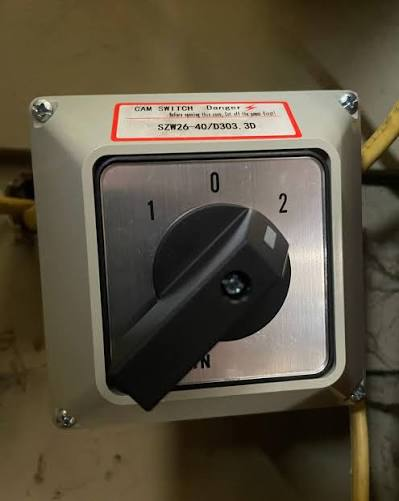
Level 4: Automatic Whole House Backup
This is in principle the same as Level 3 above. The main difference is that the “changeover switch” is an automatic one which senses the voltage on the grid/EPS and switches automatically.
This changeover is seamless, however, requires a large battery to facilitate the home’s demand which can be costly.
This is perhaps “overkill” for most households. One area where this could be useful is if there is essential medical equipment or systems that require powering while you are out of the house or cannot physically get to the “changeover switch” to manually activate the EPS.
It could be argued that Level 2 can be utilised instead in this situation where only the essential circuits are connected to the EPS rather than the whole house.

Is an EPS Solar System Right For Me?
EPS or Emergency Power supply can be an expensive addition to any solar panel solution, however worthwhile under the right circumstances.


Comments